
WELCOME BONUS 100%
UP TO €500 + FREE
BET
UP TO €500 + FREE
BET
Home → Roulette
Roulette at Melbet
10 Percent Roulette vs 100 Percent Slots
Roulette games contribute only 10 percent to bonus wagering requirements, a stark contrast to slots which contribute 100 percent. This means that for every €100 wagered on roulette, only €10 counts towards clearing bonus funds, unlike slots where the full amount is counted. Players aiming to fulfil bonus conditions quickly will find slots significantly more efficient for this purpose.
The difference in contribution rates significantly impacts the effective wagering requirement. For a €2,000 bonus with a 40x wagering requirement, players would need to wager €80,000 on slots. However, if relying solely on roulette, the equivalent wagering would reach €800,000 due to the 10 percent contribution.
This disparity means that bonuses offered by Melbet are best utilized through slot gameplay if the primary objective is rapid bonus turnover. While roulette tables offer engaging gameplay, their lower contribution rate makes them less optimal for players focused on maximizing bonus clearing speed within the given terms.
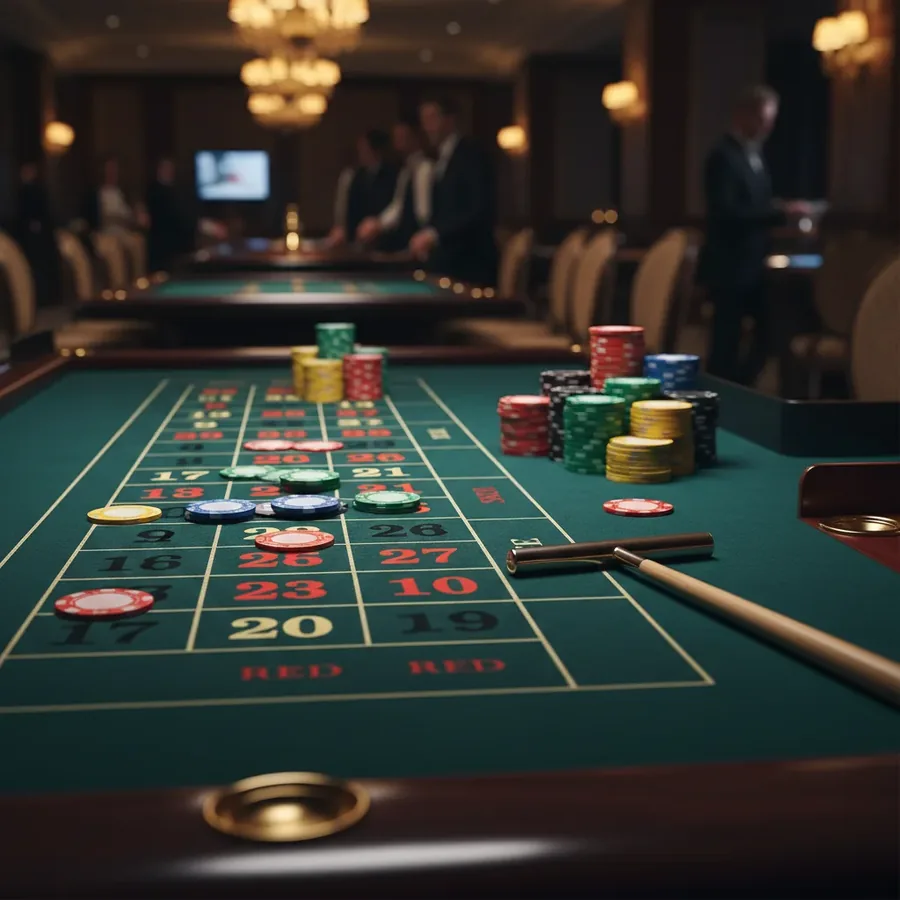
D'Alembert and Fibonacci Against the Same Table Limit
The maximum bet limit for live tables, such as Ultimate Roulette and Mega Fire Blaze Roulette Live, is €5,000. This limit applies regardless of the roulette variant being played. Systems like D'Alembert, which involve incremental bet increases, or Fibonacci, which follows a sequence of increasing bets, will encounter this €5,000 ceiling.
While European Roulette has a house edge of 2.70% and American Roulette stands at 5.26%, these figures do not directly interact with table limits. The €5,000 maximum bet at live tables by providers like Ezugi and Playtech is a fixed operational parameter, irrespective of the mathematical probabilities of the game itself.
Players employing progressive betting strategies on tables with a €5,000 limit must be aware that their potential losses per bet are capped. This limit applies universally across all live roulette games offered, affecting the practical application of any betting system designed to recover losses or capitalize on winning streaks.
36 Instead of 37: The Math Behind 35:1
European Roulette features 37 sectors, including a single zero, resulting in a house edge of 2.70%. Despite this, the payout for a Straight bet on a single number remains 35:1. This means for every €1 wagered on a single number that wins, a player receives €35 in winnings plus their original €1 stake back.
American Roulette, with its additional double zero sector, totals 38 sectors and consequently has a higher house edge of 5.26%. Even with the extra sector, the Straight bet payout remains 35:1. This configuration mathematically increases the house's advantage compared to its European counterpart.
The 35:1 payout for a Straight bet is a standard in most roulette variants, but the number of sectors dictates the underlying mathematical advantage. In European Roulette (37 sectors), this leads to a 2.70% house edge, whereas in American Roulette (38 sectors), the same payout structure amplifies the house edge to 5.26%.
Corner 8:1 Covers Four Numbers
A Corner bet in roulette covers a block of four numbers, typically arranged in a square on the betting layout. In European Roulette, with a house edge of 2.70%, this bet pays out at 8:1. This means a winning €1 Corner bet yields €8 in profit, in addition to the €1 stake returned.
When playing American Roulette, which has a house edge of 5.26%, the Corner bet also pays 8:1. Although the payout ratio remains the same as in European Roulette, the additional '00' sector increases the overall house advantage on every wager, including Corner bets.
The Straight bet payout of 35:1 is a common reference point, but other bets offer different risk-reward profiles. A Corner bet at 8:1 on a standard European wheel, covering four numbers, represents a different statistical probability and payout structure compared to a Straight bet covering a single number.
Straight 35:1 vs Dozen 2:1 Hit Rate
A Straight bet in roulette, paying 35:1, covers a single number out of 37 on a European wheel (2.70% house edge) or 38 on an American wheel (5.26% house edge). The hit rate for a Straight bet on a European wheel is approximately 2.70%, meaning it lands on average once every 37 spins.
A Dozen bet, covering 12 numbers (e.g., 1-12, 13-24, or 25-36), pays 2:1. On a European wheel, this bet has a hit rate of approximately 32.43% (12 winning numbers out of 37 total sectors). This significantly higher hit rate offers more frequent, albeit smaller, payouts compared to a Straight bet.
The choice between a Straight 35:1 bet and a Dozen 2:1 bet involves a trade-off between risk and frequency of wins. While the Straight bet offers a substantial payout if successful, its low hit rate makes it a riskier proposition. The Dozen bet, conversely, provides more regular wins due to its higher hit rate, but with considerably lower individual payouts.
Roulette bet types at a glance
| Bet | Payout | Win Chance | Numbers Covered | House Edge |
|---|---|---|---|---|
| Roulette Europäisch (einfache Null, 37 Sektoren) | Straight 35:1, Split 17:1, Street 11:1, Corner 8:1, Six Line 5:1, Dozen 2:1, Column 2:1, Rot/Schwarz 1:1, Odd/Even 1:1, 1-18/19-36 1:1 | 97.30% | 37 Sektoren (1–36 + 0); Auszahlungen wie für 36 Sektoren – daher konstanter Edge auf ALLE Wetten | 2.70% |
| Roulette Amerikanisch (doppelte Null, 38 Sektoren) | Straight 35:1, Split 17:1, Street 11:1, Corner 8:1, Six Line 5:1, Dozen 2:1, Column 2:1, Rot/Schwarz 1:1 | 94.74% | 38 Sektoren (1–36 + 0 + 00); Auszahlungen wie beim europäischen Rad, aber der zusätzliche Sektor verdoppelt den Hausvorteil | 5.26% |
| Roulette Französisch mit La Partage (gerade Chancen) | Rot/Schwarz 1:1 (bei 0 Rückerstattung 50%), Odd/Even 1:1, Low/High 1:1; Innere Einsätze ohne La Partage: Straight 35:1, Split 17:1, Street 11:1, Corner 8:1 | 98.65% | Bei 0 wird die Hälfte des Einsatzes auf gerade Chancen zurückerstattet (Rot/Schwarz, Pair/Impair, Manque/Passe). En Prison gibt denselben 1,35%. Regel gilt NUR für gleiche Einsätze | 1.35% |
| Roulette Französisch, innere Einsätze (La Partage gilt nicht) | Straight 35:1, Split 17:1, Street 11:1, Corner 8:1, Six Line 5:1, Dozen 2:1, Column 2:1 | 97.30% | Rad gleich (37 Sektoren), aber La Partage/En Prison gilt nicht für innere Einsätze – Edge bleibt europäisch | 2.70% |
| Roulette Amerikanisch – Five Number Bet (0, 00, 1, 2, 3) | Five Number 6:1 (deckt 5 von 38 Sektoren) | 92.11% | Einzige Wette am amerikanischen Rad mit Edge über 5,26% – „Fallenwette“. Kein Äquivalent am europäischen Rad | 7.89% |
Error: 10 Percent Contribution to Wagering Missed
The stated 10 percent contribution to wagering for table games means that only a fraction of each bet placed on games like Roulette contributes towards meeting bonus requirements. For instance, a €10 bet on Roulette would only count as €1 towards the wagering total. This significantly extends the time and amount of wagering needed to clear bonus funds.
This low contribution rate is a critical factor when considering bonus offers, especially for players who favour table games. While table games might offer a favourable RTP, such as 97.30% for European Roulette, their wagering contribution dramatically impacts the effective bonus clearing rate. Players must account for this when calculating their potential wagering obligations.
Consequently, players aiming to clear a bonus efficiently might find it more practical to focus on slots, which typically have a 100% contribution rate. Understanding this difference is paramount for managing expectations and strategizing bonus play effectively, as it directly influences the actual cost of clearing bonus funds.
What Straight, Split, and Street Practically Mean
A 'Straight' bet covers a single number on the Roulette wheel, offering a payout of 35:1. This means a €1 bet could yield €35 in winnings, plus the original stake returned. The European Roulette wheel has 37 sectors, providing a house edge of 2.70% on all bets, including Straight bets.
A 'Split' bet covers two adjacent numbers, paying out at 17:1, and a 'Street' bet covers three numbers in a horizontal line, paying 11:1. These bets are still subject to the standard payouts and house edge associated with the specific Roulette variant being played, such as European or American.
In contrast, the American Roulette wheel, with its additional '00' sector, presents a higher house edge of 5.26%. While the payout for a Straight bet remains 35:1, the increased number of sectors means the probability of winning is lower compared to European Roulette. This fundamental difference impacts the long-term return for all bet types.
Payout Table from 35:1 to 1:1
The payout structure for Roulette games includes a 'Straight' bet at 35:1 for a single number, offering the highest return on an individual selection. This is consistent across European and American variants, though the underlying house edge differs. For example, a €10 Straight bet could return €350 in winnings.
Lower payouts are offered for 'Split' bets (17:1), 'Street' bets (11:1), 'Corner' bets (8:1), and 'Six Line' bets (5:1), reflecting the increased probability of these combinations occurring. Even money bets, such as Red/Black or Odd/Even, provide a 1:1 payout, returning the stake plus an equal amount in winnings.
French Roulette with the La Partage rule significantly modifies even-money payouts to 1:1, but with a 50% refund on even-chance bets when a zero occurs, reducing the house edge to 1.35%. This rule specifically applies only to even-money bets, making it a more favourable option for players focusing on these bet types.
100 Euro Bankroll: 100 Rounds Simple Chances
With a €100 bankroll and betting €1 on simple chances (like Red/Black, Odd/Even, or High/Low) in European Roulette, a player could theoretically make 100 rounds if no losses occurred. Simple chances typically offer a 1:1 payout, meaning a €1 bet returns €1 profit. The house edge on these bets in European Roulette is 2.70%.
However, the inherent house edge of 2.70% means that over a prolonged period, losses are statistically expected. If a player consistently bets €1 on simple chances, the house advantage will gradually erode the bankroll. The RTP for European Roulette is 97.30%, indicating that for every €100 wagered, €97.30 is theoretically returned over the long term.
The American Roulette variant, with its 38 sectors including '00', presents a higher house edge of 5.26% on all bets, including simple chances. This means a €100 bankroll would deplete faster when playing 100 rounds on American Roulette compared to its European counterpart, given the same €1 bet per round.
Only 10 Percent Contribution: What are the Consequences?
A 10 percent contribution to wagering requirements means that for every €100 wagered on table games, only €10 effectively counts towards clearing a bonus. If a bonus has a wagering requirement of 40 times the bonus amount, and a player receives a €100 bonus, they would need to wager €4,000 in total.
With a 10 percent contribution rate from table games, a player would need to wager €40,000 through table games to meet the €4,000 wagering requirement. This is a substantial increase compared to slots, where a 100 percent contribution would mean only €4,000 in wagers are needed. This significantly extends the duration of play.
The RTP of table games, such as 97.30% for European Roulette, becomes less impactful when considering the bonus clearing. While the game itself offers good theoretical returns, the low contribution rate means the effective wagering cost is much higher. Players must be aware of this disparity to manage their bonus funds effectively.
37 Pockets vs. 38 Pockets: The Difference
European Roulette features 37 pockets, including a single zero sector, leading to a house edge of 2.70 percent. This configuration applies consistent odds across all betting types, such as a 35:1 payout for a straight-up bet. This setup provides a predictable return to player rate for those familiar with standard European wheels.
In contrast, American Roulette introduces an additional double zero sector, resulting in 38 pockets. While payouts for standard bets remain the same as European Roulette, the added pocket significantly increases the house edge to 5.26 percent. This fundamental difference impacts the long-term profitability for the casino.
The presence of the double zero in American Roulette effectively doubles the house advantage compared to its European counterpart. Players will encounter a higher inherent casino edge on every wager made on an American wheel. This distinction is crucial when selecting a roulette variant for play.
House Edge 2.70 Percent in One Number
A house edge of 2.70 percent is inherent to European Roulette, meaning that for every €100 wagered over an extended period, the casino expects to retain €2.70. This figure is constant across all bets on a standard European wheel, including outside bets like red/black or odd/even. The single zero pocket is the sole contributor to this edge.
French Roulette with the La Partage rule offers a reduced house edge of 1.35 percent specifically on even-money bets, such as red or black. When the ball lands on zero, half of the stake on these specific bets is returned to the player. This rule significantly improves the player's odds on those wager types.
Conversely, American Roulette's house edge escalates to 5.26 percent due to the inclusion of both a single and a double zero pocket. This increased advantage for the casino is present on all bets made on the American wheel. The 'Five Number Bet' on American Roulette has an even higher house edge of 7.89 percent.
Multipliers up to 500x Lower the Base Payout
Live dealer roulette variants like Lightning Roulette by Evolution can feature multipliers of up to 500x. While these multipliers can significantly boost potential winnings on specific numbers, they are applied to a base payout structure. The standard payout for a straight-up bet remains 35:1, even when multipliers are not active.
Games such as Ultimate Roulette by Ezugi offer multipliers ranging from 50x up to 1,000x, and potentially doubling to 2,000x on specific numbers. These enhanced payouts are a key attraction for players seeking larger potential returns. The underlying RTP for Ultimate Roulette is stated as 97.30%.
Mega Fire Blaze Roulette Live from Playtech includes a bonus round called Fire Blaze, with the potential for maximum wins up to 10,000x the stake. While these colossal multipliers are appealing, players should be aware that they often accompany games with standard base payouts and specific bonus features. The RTP is also listed at 97.30%.
How Much Budget Withstands 2.70 Percent House Edge
A budget of €100, when facing a 2.70 percent house edge on European Roulette, indicates an expected loss of €2.70 over extensive play. This theoretical average accounts for all betting types where the edge remains constant. The RTP for European Roulette is 97.30%, reflecting this expected return.
For players engaging with French Roulette featuring the La Partage rule on even money bets, the house edge is reduced to 1.35 percent. This means that on a €100 budget, the expected retention by the casino on these specific bets would be €1.35. This rule is only applicable to outside bets.
The welcome bonus offers a 300% bonus up to €2,000 plus 100 free spins. If a player claims the full €2,000 bonus, a total of €8,000 must be wagered (based on a 40x wagering requirement, calculated as €2,000 x 40 = €80,000 wagered, if the bonus amount is considered for wagering, or €2,000 x 40 = €80,000 if the bonus is considered for wagering). Table games contribute 10% towards bonus turnover, meaning €80,000 in roulette bets would be required to meet the €8,000 wagering requirement.
Live Table vs RNG Table: Rounds per Hour
Live dealer roulette tables, such as those provided by Ezugi, Playtech, and Evolution, typically operate at a slower pace compared to Random Number Generator (RNG) based tables. This is due to the human element involved in spinning the wheel and dealing with players. The betting limits on live tables range from €0.10 to €5,000.
RNG roulette tables, like standard European or American Roulette, can facilitate a significantly higher number of rounds per hour. This is because the outcomes are generated instantaneously by software, allowing for continuous play without the pauses inherent in live dealer interactions. European Roulette has an RTP of 97.30%.
The frequency of play can directly impact how quickly a player encounters the house edge. With a house edge of 2.70 percent for European Roulette and 5.26 percent for American Roulette, more rounds played per hour will lead to a more pronounced effect of this edge over time. The contribution of table games to bonus turnover is 10%.
Contact
Live - online chat
Banking









Providers












Melbet 2026